
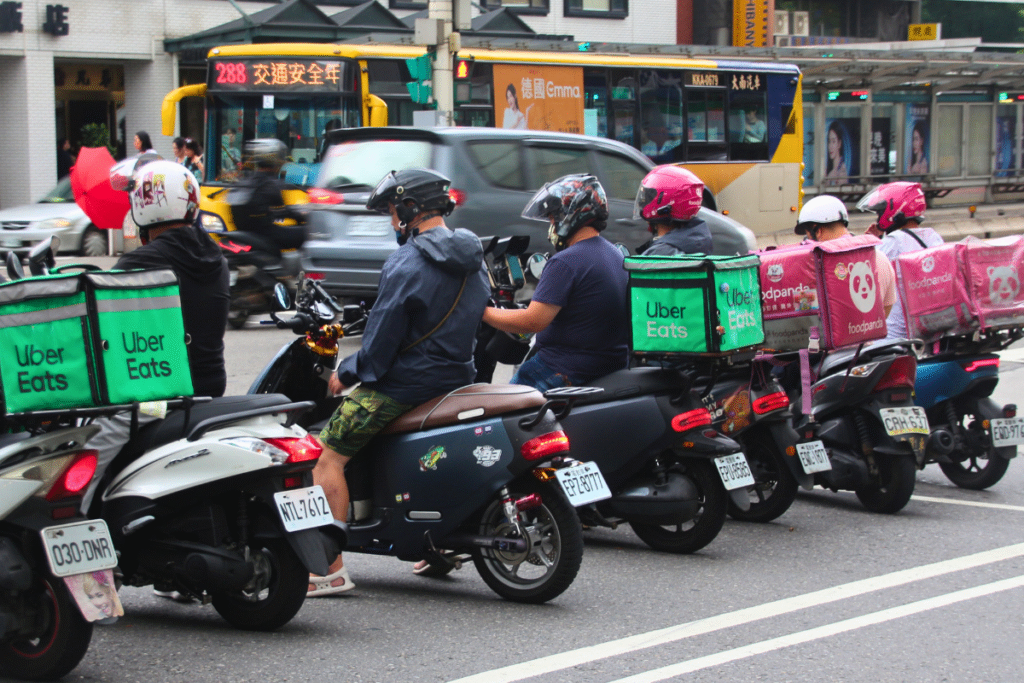
Food delivery services have existed for a long time, morphing alongside the development of different technological modes of communication. However, the current business model dominated by online platforms and seen in most urban spaces has only existed for about 15 years.
In Taiwan, the platform-driven food delivery industry emerged in 2012. Built on favorable conditions including high urban population density, widespread scooter use, an affordable prepared-food industry, and a culture of frequently eating out, Taiwan was naturally well suited to food delivery. During the COVID-19 pandemic, many restaurants suspended dine-in services. People quarantining at home continued to want prepared food, driving the rapid expansion of food delivery platforms.
Major Food Delivery Platforms in Taiwan
After years of competition among multiple brands, Taiwan’s food delivery market has evolved into a structure characterized by two major players plus many smaller ones.
Foodpanda
In March 2012, two Swiss entrepreneurs founded Foodpanda in Singapore, primarily serving Southeast Asian markets. It began operating in Taiwan in May 2012, becoming Taiwan’s earliest major food delivery platform.
Although Foodpanda was acquired by German company Delivery Hero in 2016, its business model has not changed significantly.
According to a survey by the Institute for Information Industry, 67.8% of Taiwan-based food delivery platform users in 2025 used Foodpanda to order meals, making it Taiwan’s largest food delivery platform (Market Intelligence & Consulting Institute, 2025 [1], 2026 [2]).
Uber Eats
In 2014, Uber, originally a ride-hailing company, established Uber Eats in California and entered the food delivery business. Uber Eats began operating in Taiwan in October 2016.
Through extensive promotional campaigns, discounts, and favorable compensation schemes for delivery workers, it gradually expanded its market share and eventually became a major rival to Foodpanda.
According to the Institute for Information Industry, 60.3% of Taiwan-based food delivery platform users in 2025 used Uber Eats, second only to Foodpanda, with the gap between the two narrowing year by year.
In May 2024, Uber Eats planned to acquire Foodpanda’s Taiwan business, but the deal was rejected by the Taiwanese government at the end of that year.
Grab
In 2012, two ethnic Chinese Malaysian entrepreneurs founded Grab to operate a ride-hailing service, primarily in Southeast Asian markets. In 2018, Grab established GrabFood and entered the food delivery business. Although GrabFood has not operated directly in Taiwan, in March 2026 it announced plans to acquire Foodpanda’s Taiwan business, seeking to become Taiwan’s most influential food delivery platform.
PX Go!
+ Foodomo
Usage rates around 10%
The usage rates of Taiwan’s local platforms PX Go! and Foodomo are both around 10%, far below those of the two major platforms. However, they are respectively operated by Taiwan’s two largest brick-and-mortar retail groups and therefore still have room for future growth.
Other platforms, including South Korea’s Coupang Eats, Singapore’s ShopeeFood, China’s Lalamove, and Taiwan’s momo and Cutaway, have relatively limited influence.
Controversy One: Legality of Operations
Many controversies surround the food delivery scene. The first controversy pertains to regulatory issues concerning registration requirements for ride-hailing businesses. In Taiwan, commercial vehicles, including taxis, must be registered with the government, and drivers must hold commercial driver’s licenses. However, the emergence of Uber in 2013 allowed many drivers with only ordinary driver’s licenses and no commercial licenses to use their spare time to accept passenger trips. These gray-market commercial drivers fell outside the scope of Taiwan’s existing legal framework, raising questions concerning traffic safety, verification of drivers’ criminal records, tax collection, clarification of platform liability, and whether the relationship between platforms and drivers constituted employment.
As a result of this legal gray zone, confrontation surrounding ride-hailing in Taiwan ensued over the years. The government imposed fines on Uber, Uber refused to pay the fines and taxes, and drivers staged protests by refusing to provide rides. Ultimately, the parties involved reached a compromise. In 2016, Taiwan’s Ministry of Transportation and Communications amended the Regulations Governing Automobile Transportation Enterprises (汽車運輸業管理規則), adding provisions related to “diversified taxi services” (Regulations Governing Automobile Transportation Enterprises [3]). From then on, drivers matched with riders via platforms were required to hold commercial driver’s licenses, and their vehicle license plates were required to differ in color from those of traditional taxis and private vehicles. Uber subsequently established a local subsidiary in Taiwan to manage all of its operations in the country, comply with local regulations, and pay taxes.
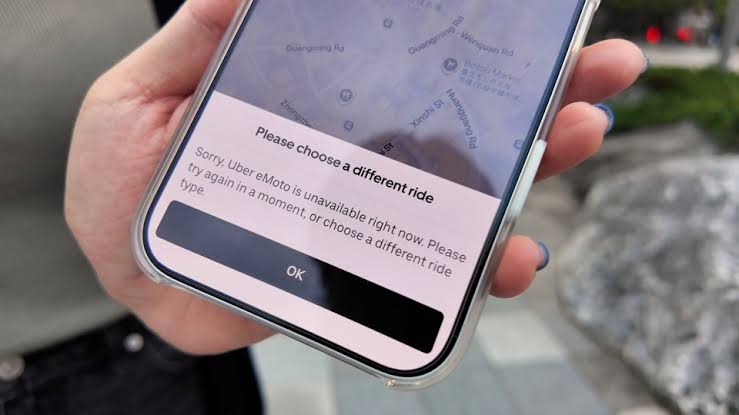
Today, the Uber Group has four companies in Taiwan: Uber Formosa, Uber Eats Management Taiwan, Uber Payments Taiwan, and Rides Formosa, respectively responsible for ride-hailing, food delivery, payment services, and scooter ride-hailing services. Because scooter ride-hailing is illegal in Taiwan, Rides Formosa technically is not supposed to operate; however, it recently conducted short-term promotional operations in Beitou (“Scooter Passenger Cultural Experience”) and was fined NT$700,000 in 2026 as a result (United Daily News, 2026 [4]).
Although food delivery itself does not require a business license, the controversy surrounding Uber’s ride-hailing services spilled over into public perceptions of its delivery business, leading many people to rightfully question Uber’s integrity and regard it as a company inclined to skirt local laws.
Foodpanda, by contrast, established a company in Taiwan as early as 2012 and did not engage in a business requiring a commercial operating license, so it was not drawn into the same level of controversy faced by Uber.
Controversy Two: Employment Status (or Lack Thereof)
Another significant controversy concerns the murky employment status of delivery workers. For years, platforms have maintained that they merely facilitate matching of couriers and customers, and thus do not technically employ delivery workers. They therefore classify delivery workers as independent contractors rather than employees, sometimes referring to them as “Delivery Partners.”
Such a designation has engendered significant controversy worldwide across different jurisdictions, including Taiwan. Some delivery workers have accepted this characterization, while others have argued that they are employees of the platforms, filing lawsuits seeking judicial recognition of an employment relationship. Possibly because management practices vary from case to case, some court decisions deemed the relationship as one of employment, while others have classified it as contracting.
In October 2019, Taiwan’s Ministry of Labor conducted labor inspections of several food delivery and courier platforms, including Uber Eats and Cutaway. It concluded that their operating practices demonstrated subordination at the personal, economic, and organizational levels, and therefore determined that the relationship between platforms and delivery workers was one of employment.
Because the platforms had failed to establish worker rosters as required by law, formulate work rules, hold labor-management meetings, contribute to labor pension accounts, or provide labor insurance coverage, they were ordered to make improvements within a specified period. The delivery platforms rejected the Ministry of Labor’s determination and filed administrative lawsuits. Ultimately, the courts ruled in favor of the Ministry of Labor, making it easier for many delivery workers thereafter to establish an employment relationship with the delivery platforms (Judicial Yuan Judgments Database, 2022a [5], 2022b [6], 2022c [7]).
To this day, delivery workers have not all been definitively and categorically assigned to a single designation of “employee” or “contractor.” Their status depends on specific management practices, such as how orders are assigned, how compensation is calculated, whether platforms require workers to wear uniforms or use helmets and insulated delivery bags bearing company logos, and whether customer ratings affect workers’ performance evaluations.
Controversy Three: A Special Law for Delivery Workers
Because delivery workers have such diverse and complex employment arrangements, labor unions and many scholars researching the issue have long called on the government to enact special legislation so that all couriers or drivers can receive basic labor protections. The goal is to extend labor protections to all workers, whether they are classified as employees, independent contractors, or are currently unclassified.
In 2022, the Taipei City Council became the first to pass the Taipei City Self-Governance Ordinance Governing Food Delivery Platform Operators [8]. It requires food delivery platforms to:
- Provide delivery workers with mechanisms concerning compensation calculations, refunds resulting from order cancellations, delayed deliveries, or damaged goods.
- Provide occupational safety, food safety, and traffic safety training for new delivery workers; provide relevant courses annually for active delivery workers; and provide additional education to workers involved in accidents.
- Purchase commercial insurance covering accidental injury, disability, or death for delivery workers.
- Suspend operations when natural disasters occur or when the government announces the suspension of work and school.
- Retain electronic records concerning the time, location, and payment details associated with food orders and delivery workers’ services for one year.
In 2025, the Ministry of Labor introduced a nationwide draft law, the Delivery Worker Rights Protection and Food Delivery Platform Management Act, which was passed by the Legislative Yuan in January 2026 [9]. Please read more about it in Taiwan Labor Watch’s aforementioned Deep Dive piece to learn more about what the new legislation includes, as well as the challenges which emerged after the act took effect.
Controversy Four: Mergers and Monopoly
Taiwan’s food delivery industry is now facing another threat: monopolization via corporate consolidation. For instance, in May 2024, Uber Eats controversially planned to acquire Foodpanda’s Taiwan business. The transaction was subsequently submitted to the Fair Trade Commission for review, and rejected in December 2024 on antitrust grounds. Taiwan Labor Watch reviews this specific case as well as the trajectory towards monopolization in the related Deep Dive piece.
Controversy Five: Mergers and Information Security
Only 15 months after Uber Eats was prevented from acquiring Foodpanda’s operations in Taiwan, a new buyer came onto the scene. In March 2026, Grab announced plans to acquire Foodpanda’s Taiwan business (Grab, 2026 [10]). The deal triggered an uproar among delivery workers. Many questioned whether it represented an indirect acquisition strategy by Uber, because Uber owns approximately 13% of Grab. Additionally, information security concerns arose, particularly as Grab relies on Chinese software, and 5% of the company is owned by a Chinese ride-hailing platform, DiDi Chuxing. More information can be found in Taiwan Labor Watch’s related Deep Dive piece.
Organizing Delivery Workers
In Taiwan, more than a dozen unions have been formed by delivery workers, with no single large-scale union dominating the field. The result is a “flourishing” landscape of organizations. To a large extent, this reflects Taiwan’s distinctive union system. In Taiwan, unions are divided into three categories: enterprise unions, occupational unions, and industrial unions:
- Enterprise unions (企業工會) are open to workers employed by a particular company. The uncertain employment status and high turnover of delivery workers make it difficult for them to establish such organizations.
- Delivery workers without employee status must join occupational unions (職業工會) in order to receive labor and health insurance benefits. These unions generally operate within a single city or county, and many focus primarily on basic administrative functions rather than policy advocacy. Each major city in Taiwan has its own occupational union for delivery workers.
- Workers in the same industry may freely form industrial unions (產業工會), whose organizational structure is more similar to unions in many other countries. Taiwan currently has at least one nationwide and three regional industrial unions for delivery workers. They are more active in policy reform related to delivery work, speak more frequently on legislation concerning the special law and on acquisition cases, and have organized several protests by delivery workers.
For this report, Taiwan Labor Watch interviewed several delivery workers and joined social-media groups used by delivery workers to observe the issues they care about and the characteristics of their members. We found that delivery workers constitute a highly heterogeneous, mobile, and loosely organized labor force. Thus, beyond the union system itself, the occupational culture of delivery workers may also help explain the proliferation of small unions.
Although men remain the majority, women also constitute a significant portion of the total body of drivers in Taiwan, with different studies estimating their share at between 10% and 39%. Most workers are between 20 and 40 years old, but the workforce also includes people over 40 who entered platform work because of career changes, family responsibilities, or declining opportunities in the traditional labor market. Educational backgrounds are similarly diverse, ranging from university students and graduates to people with other professional or full-time jobs, as well as workers from traditional service and manual-labor sectors who use delivery work as a source of income.
For some, delivery work is their primary or even sole source of income. Others hold regular full-time jobs at the same time. Some accept orders only at night or on weekends, while others turn to delivery work as a transitional source of income after leaving a job, while unemployed, or during a career change. This produces a certain transience within the workforce, with substantial movement in and out.
Compared with traditional workplaces, delivery workers have no fixed workplace, fixed colleagues, fixed supervisor, or fixed schedule. Workers who frequently operate in the same area may develop weak social ties, becoming acquaintances who nod to one another. Some overcome the structural distance from their peers and form groups on digital platforms such as Facebook and LINE to exchange information, discuss labor rights, or complain about workplace frustrations and seek emotional support.
Taiwan Labor Watch has also observed that, despite sometimes wearing or using uniforms, helmets, or insulated delivery bags bearing specific brand logos, delivery workers have relatively low loyalty to any particular platform. Many use multiple platforms simultaneously and choose which one to log into based on current compensation, order density, incentives, work area, and other conditions. These factors fluctuate frequently and unpredictably, much like the stock market, prompting workers to switch platforms often.
An Evolving Landscape
Food delivery is a captivating industry. It uses the latest and constantly evolving information technology to satisfy one of humanity’s oldest and most basic needs: consumption of food. Its rules of operation are set by multinational corporations that process billions of orders and are often headquartered in locations on the other side of the world. Those orders depend on countless frontline workers to fulfill them, yet when it comes to employer responsibility, companies quickly step back, declaring themselves to be merely platforms that match workers with customers and restaurants.
Locally, workers value a highly autonomous labor process. Often described by platforms with entrepreneurial language, couriers decide when to log on, which platform to deliver for that day, and whether to accept an order; with a twist of the scooter throttle, they can simply ride away. Indeed, some delivery workers prefer not to be classified as employees, feeling that the “contractor” arrangement gives them greater freedom. Yet the platforms firmly control order-assignment, compensation, and evaluation systems through opaque algorithms, which are tightly protected as trade secrets and subject to change at any time.
Delivery workers are highly active in expressing their views. Many have a strong occupational identity, but because of institutional and cultural factors, they have formed only loosely connected communities, with relatively low unionization rates compared to other industries. When they do form informal coalitions, these groups often operate independently of one another.
Leaders of industrial unions can function as influential voices capable of mobilizing workers across platforms for protests when necessary, but the number of dues-paying members is often too small to sustain routine institutional operations. Occupational unions with the capacity to handle day-to-day administration, meanwhile, tend to be less active in monitoring and advocacy. Such organizational power often struggles to effectively resist employers. So far in Taiwan, it appears that the government, rather than unions, has exerted greater pressure on employers.
After controversies over denial of employment status, labor rights violations, monopoly concerns, and possible information security issues, what other disputes will the food delivery industry face? What will be the ultimate outcome of Grab’s acquisition of Foodpanda? Is the ecosystem featuring platforms, delivery workers, restaurants, and consumers truly a zero-sum game? Can delivery workers’ unions develop more robustly in the future and strengthen their role in protecting labor rights? All of this warrants further observation. Taiwan Labor Watch will keep an eye on the plight of couriers.
[1] Market Intelligence & Consulting Institute (2025)
[2] Market Intelligence & Consulting Institute (2026)
[3] Regulations Governing Automobile Transportation Enterprises
[5] Judicial Yuan Judgments Database (2022a). Taipei High Administrative Court, Judgment No. 109-Su-1046
[6] Judicial Yuan Judgments Database (2022b). Taipei High Administrative Court, Judgment No. 110-Jian-Shang-156
[7] Judicial Yuan Judgments Database (2022c). Taiwan Taipei District Court, Civil Judgment No. 110-Lao-Su-377
[8] Taipei City Self-Governance Ordinance Governing Food Delivery Platform Operators
[9] Delivery Workers’ Rights Protection and Delivery Platform Management Act