
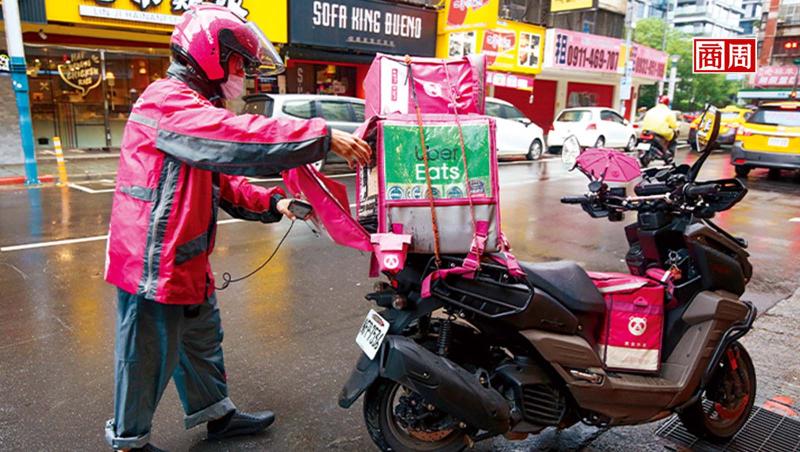
Like many other urban spaces around the world, cities in Taiwan are also contending with the proliferation of food delivery and ride-hailing platforms. In the midst of this scramble for frictionless and speedy courier services, many workers are caught in the crosshairs, subject to unclear legal classifications with regard to their employment statuses.
Today, Taiwan’s food delivery market is effectively divided between Foodpanda and Uber Eats, which together account for the majority of the market. After Uber Eats’ 2024 attempt to acquire Foodpanda’s operations in Taiwan was rejected by the Fair Trade Commission due to antitrust concerns, Grab, a platform from Malaysia, has now announced plans to acquire Foodpanda in March 2026. Notably, this announcement did not emerge unscathed from widespread criticism and currently awaits approval from the Fair Trade Commission. Delivery workers in Taiwan were some of the loudest voices speaking out against this potential merger.
This Deep Dive from Taiwan Labor Watch takes a look at the food delivery market in Taiwan, highlighting legal developments as well as concerns raised over recent attempts to monopolize via acquisition. For a broader analysis of the food delivery platform landscape in Taiwan, as well as a glimpse into the current worker organizing taking place, check out Taiwan Labor Watch’s Fundamentals piece, Exploitation of Food Delivery Couriers in Taiwan.
Legislative Protection for Delivery Workers
When it comes to legislation related to couriers, Taiwan still has a long way to go. Previously, the city of Taipei passed the 2022 Taipei City Self-Governance Ordinance Governing Food Delivery Platform Operators, which is covered in the aforementioned Fundamentals piece from Taiwan Labor Watch.
More recently, in 2025, the Ministry of Labor introduced a nationwide draft law, the Delivery Worker Rights Protection and Food Delivery Platform Management Act [1], which was finally passed by the Legislative Yuan in January 2026. The law requires food delivery platforms to:
- Sign standardized labor contracts provided by the Ministry of Labor with their delivery workers.
- Pay delivery workers at least NT$45 per order, while ensuring hourly compensation of at least 1.25 times the statutory minimum wage.
- Establish a grievance mechanism to receive complaints from delivery workers concerning compensation calculations, delivery-time disputes, account suspension, and disputes with merchants or consumers.
- Purchase commercial insurance covering accidental injury, disability, or death for delivery workers.
- Allow delivery workers to decide for themselves when to log on and when to take breaks, and prohibit adverse treatment on that basis.
- Suspend operations when natural disasters occur or when the government announces the suspension of work and school.
- Notify labor inspection authorities when a delivery worker suffers an accident above a specified level of severity.
- Provide occupational safety, food safety, and traffic safety training.
- Retain relevant electronic records for two years.
It is worth noting that the law does not comprehensively define whether delivery workers are employees. Most provisions apply equally to employees and contractors, and to a considerable extent mirror statutory protections already available under conventional employment relationships, such as using commercial insurance as a counterpart to labor insurance and establishing occupational safety and health standards. As evidenced through this new law, the Ministry of Labor’s apparent approach is to set aside the question of employment status for the time being and first raise the substantive protections available to contractors to levels closer to those available to employees.
After the law was passed, it received favorable reviews from the vast majority of delivery workers, although some researchers expressed regret that it did not require platforms to disclose algorithmic information. Food delivery platforms were strongly dissatisfied with the statutory minimum compensation, arguing that the legislation interferes with the market and will lead to costs being passed on to consumers
Challenges After the New Law Took Effect
The aforementioned special law for delivery workers took effect in July 2026 and, at the time of writing, has been enforceable for two months. According to delivery workers interviewed for this report, their actual compensation has indeed increased. However, the fees paid by consumers and the proportion of fees retained by platforms have not changed significantly compared with before the law took effect, suggesting that restaurants may have absorbed most of the additional costs. It was also difficult to determine how long the current situation would last.
Clearly, food delivery platforms are not content with the status quo. On the very day the special law took effect, Uber Eats introduced a new compensation formula: it combined two separate orders from different consumers into a single task assigned to a delivery worker, apparently seeking to circumvent the statutory requirement of at least NT$45 per order. The company called the practice “stacking orders.”
This practice by Uber triggered widespread anger, with delivery workers deeming it “cheating.” The National Delivery Industry Union took Uber Eats to court on fraud allegations. Several weeks later, amid sustained complaints from delivery workers, Uber Eats abolished the “stacking order” system and promised to pay back the undercounted compensation to affected workers (Uber Eats, 2026 [2]).
In September 2026, the union again disclosed that Foodpanda had not been accurately calculating delivery workers’ working hours, and was replacing actual travel time with an obscure, “reasonable travel time” calculated by the platform itself. Because the special law guarantees a minimum hourly compensation, this practice enabled the platform to save money.
The Ministry of Labor said it had reached a consensus with labor authorities in cities and counties across Taiwan to investigate whether Foodpanda had violated the law. If violations are found, penalties will be imposed on a case-by-case basis, meaning one fine for every delivery worker who was underpaid (Central News Agency, 2026 [3]).
Monopolization Concerns
Taiwan’s food delivery industry is now facing another threat: monopolization through corporate consolidation. In May 2024, Uber Eats planned to acquire Foodpanda’s Taiwan business. The transaction was subsequently submitted to Taiwan’s Fair Trade Commission (FTC) for review. According to a report by the FTC, the Herfindahl-Hirschman Index (which measures market concentration and is calculated on the basis of revenue) would rise from 5,013 before the merger to 9,986; an HHI of 10,000 represents a market dominated by a single firm (Fair Trade Commission, 2025 [4]). Although the Fair Trade Commission’s public report redacted revenue figures, the disclosed information allows the figures to be reverse-engineered, indicating that Uber Eats and Foodpanda together accounted for at least 99.73% of the market. The two were also nearly evenly matched, with the smaller player accounting for no less than 46.33% and the larger no more than 53.67%.
Once the acquisition was completed, consumers would have little room to negotiate over fees, restaurants over commission rates, or delivery workers over labor conditions. The rules of the game would, in practice, almost certainly be determined unilaterally by the platform. Labor unions strongly protested the acquisition, arguing that it would lead to deteriorating working conditions. On the eve of the FTC’s decision, unions mobilized large numbers of delivery workers to ride motorcycles to the commission’s headquarters, where they gathered and sounded their horns in protest (CivilMedia@TW, 2024 [5]). In December 2024, Taiwan’s FTC rejected the acquisition on antitrust grounds.
Information Security
Only 15 months later, Foodpanda in Taiwan found a new buyer. In March 2026, Grab, a Malaysian company focused primarily on Southeast Asian markets, announced plans to acquire Foodpanda’s Taiwan business (Grab, 2026 [6]). Similarly to the Uber Eats case, this deal triggered an uproar among delivery workers. Many questioned whether it represented an indirect acquisition strategy by Uber, because Uber owns approximately 13% of Grab.
Additionally, delivery workers raised concerns about Grab’s links to China. Not only does DiDi Chuxing, China’s largest online ride-hailing platform, hold approximately 5% of Grab, but Grab also extensively uses Chinese software. Grab’s official website states that its data is analyzed using Baidu Tongji, while Grab Maps has a close partnership with Huawei’s Petal Maps. At the same time, Grab is actively investing in autonomous driving, with the Chinese company WeRide serving as a major technology provider.
Many people are concerned that food delivery is merely Grab’s first foothold in Taiwan and that it may subsequently introduce additional services whose data collection and usage could potentially be entrusted to Chinese software for analysis and storage. In 2017, China enacted the National Intelligence Law of the People’s Republic of China [7], which requires Chinese citizens and domestic organizations to cooperate with government intelligence work. Since the law took effect, several incidents have been cited as evidence that the Chinese government invokes the law to require Chinese companies or individuals to assist in obtaining information about foreign companies, NGOs, or individuals.
In response to the many questions raised, Grab publicly stated that it uses Amazon Web Services (AWS) for user-data analysis and that its cooperation agreement with Huawei is limited to Southeast Asia and does not include Taiwan (United Daily News, 2026 [8]). Taiwan Labor Watch examined the APK of Grab’s Android app and found no URLs associated with Baidu, suggesting that Grab’s cooperation with Baidu may be limited to website data and may not extend to the app. However, Grab has not explained which company will provide technical support for its mapping functions in Taiwan if Huawei is not involved, and its statements concerning where Taiwanese users’ data are stored have repeatedly changed.
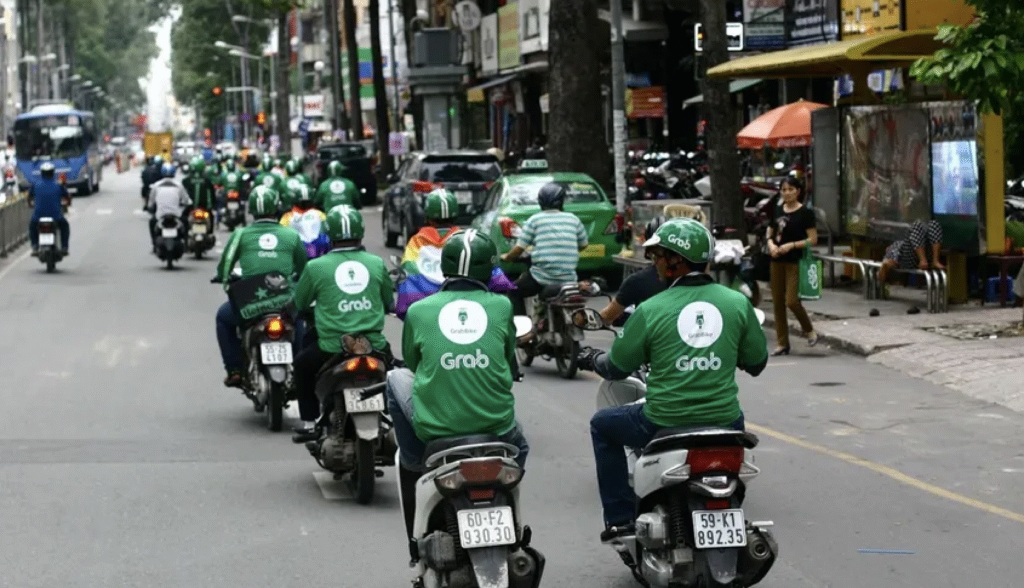
In short, concerns over Grab’s acquisition of Foodpanda have two dimensions: monopolization and information security. Because the Fair Trade Commission’s review focuses heavily on equity ownership, considerations relating to “information technology cooperation” and “access to personal data” may be overlooked, leaving information-security concerns insufficiently addressed.
Moving forward, Taiwan’s regulatory bodies need to ensure that food delivery platforms do not attempt to circumvent the recently passed Delivery Worker Rights Protection and Food Delivery Platform Management Act. In addition, policymakers need to continue engaging in conversations with couriers and unions with regards to the legal framing of drivers as full employees as opposed to precarious contractors. Spain’s 2021 Rider Law (Ley Rider) provides an interesting example as it created a legal presumption of employment for delivery workers who are controlled and managed by digital platforms, entitling them to standardized salaries.
[1] Delivery Workers’ Rights Protection and Delivery Platform Management Act
[3] Central News Agency (2026)
[4] Fair Trade Commission (2025)
[7] National Intelligence Law of the People’s Republic of China