
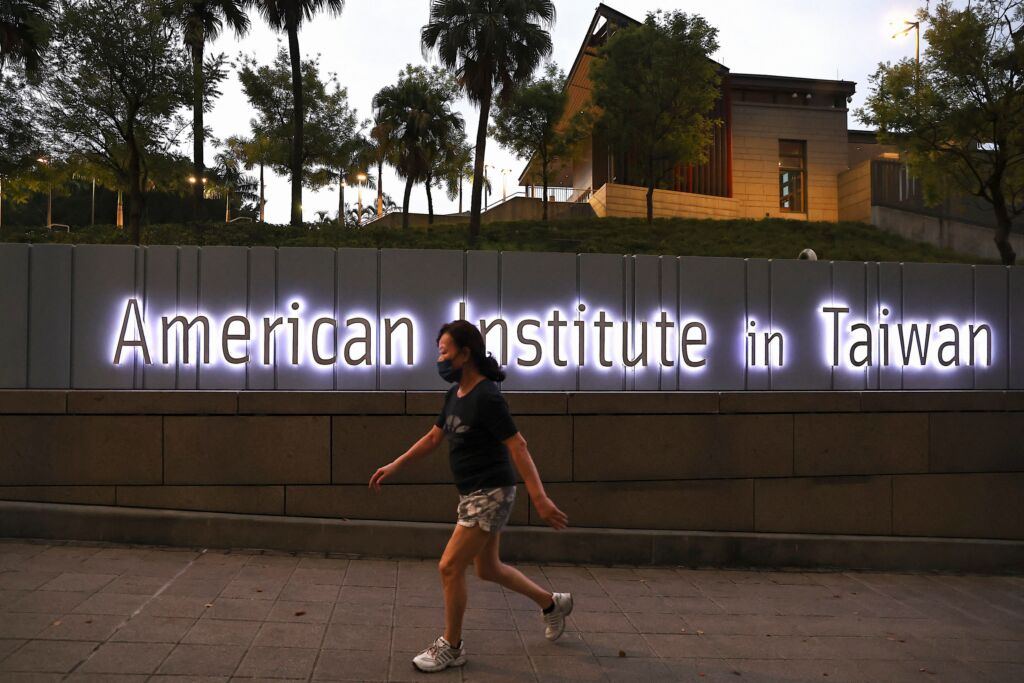
Over the last century, the relationship between the United States (U.S.) and Taiwan has only grown more entangled, spawning a mutual dependence on one another with regards to geopolitical strategy, technological supply chains, and overall trade. Beyond affecting the economy on a broader level, this entwinement has also engendered significant impacts on labor relations within Taiwan. This piece examines the historical roots and contemporary manifestations of the relationship between the U.S. and Taiwan, before examining how U.S. soft power has impacted the plight of workers in Taiwan.
Taiwan-U.S. History
Following the Kuomingtang’s (KMT, also called the Nationalist Party) violent intrusion into Taiwan in 1949, the U.S. has long supplied Taiwan with economic and military aid to defend the latter from its former Japanese colonizers and its current neighbor, China. From the 1950s to mid-1960s, U.S. aid to its anti-Communist ally during the latter’s period of post-war reconstruction surpassed $1.5 billion, consisting almost 9% of Taiwan’s gross domestic product at the time [1]. This aid was leveraged by the Kuomintang throughout its devastating period of martial law to brutally target leftists and indigenous communities in Taiwan, as well as implement drastic, state-led economic programs such as land reform, export-oriented industrialization, and high-tech development.
During this period, multiple institutions, laws, and bilateral agreements were established to further formalize relations between the U.S. and Taiwan amid fluctuating diplomatic shifts. In 1951, the non-profit and non-partisan American Chamber of Commerce (AmCham) in Taiwan was created by several executives from various American trading companies and oil companies for the purpose of allowing the private sector to get involved in trade; prior to AmCham’s creation, sales of commodities between the U.S. and Taiwan were made on a government-to-government basis under the Marshall Plan [2]. In 1959, the Industrial Development & Investment Center (IDIC) was established by the Council for U.S. Aid in order to liaise between government agencies and investors, ultimately encouraging investments in Taiwan from those overseas [3]. Twenty years later, the 1979 passing of the Taiwan Relations Act (TRA) in the U.S. gave the American Institute in Taiwan (AIT) the authority to manage unofficial relations between the U.S. and Taiwan, offering a quasi-official channel for commercial, cultural, and security collaboration.
U.S. Impact on Taiwan’s Labor Standards
Gaining recognition as one of Asia’s ‘four little dragons’ (alongside Korea, Singapore, and Hong Kong), Taiwan used its support from the U.S. to spur 9.2% annual growth rate between 1952-1980 and attract foreign investment due to its supply of cheap and non-unionized labor [4]. Over the decades, Taiwanese labor has been recruited to support manufacturing for American companies in various industries, such as semiconductors, aerospace, and electronics. The U.S.-backed KMT party was largely antagonistic towards workers and created state-controlled labor unions which were virtually ineffective when it came to collective bargaining for workers.
Work conditions were so dire under KMT rule that multiple U.S.-based NGOs and labor organizations felt the need to call attention to Taiwan’s subpar labor standards. In 1985, the AFL-CIO, Asia Resource Center [5], and the International Union of Electronic, Electrical, Technical, Salaried and Machine Workers pressured the U.S. Trade Representative to investigate Taiwan’s egregious violation of the labor standards listed in the Generalized System of Preferences legislation. The GSP was enacted by the U.S. in 1974 and was directed towards opening access to the U.S. market for developing nations, and in 1984 it was amended to include certain labor standards. According to Winn (1987), representatives of Taiwan’s government at the time pointed to the 1984 promulgation of the Labor Standards Act (LSA) to assuage worries around worker exploitation [6]. Winn (1987) astutely notes how despite historical concerns from U.S. labor organizations for the plights of workers in Taiwan, U.S. companies have largely preferred to maintain the status quo, particularly as they stand to economically benefit from cheaper labor costs.
The end of martial law in Taiwan, dovetailing with the formation of the Democratic Progressive Party, saw a slow reshaping of labor conditions in the nation. From minimum wage increases to annual leave options to workweek structure updates, hard-earned changes were slowly enacted in the decades after 1987, often with fierce advocacy and direct action from unions, student groups, and labor NGOs. Beyond ongoing and major updates to the LSA, the Labor Union Act [7], Collective Bargaining Act [8], and Act for Settlement of Labor-Management Disputes [9] were all revised, and the Labor Incident Act [10] was passed.
Today, the U.S. government and American-based entities still have varying effects on Taiwan’s working conditions. For example, one positive impact includes a report published by an American NGO Transparentem in 2025 alleging that migrant workers in Taiwan were likely subject to forced labor at various Taiwanese textile companies [11]. Another notable instance occurred in 2025, when the U.S. Customs and Border protection seized bicycles and accessories manufactured by Giant Manufacturing Co. (a Taiwanese supplier) due to the company’s reliance on forced labor in its factories. This sanction would spur Taiwan’s Ministry of Labor’s pledge to collaborate with local governments to hold investigations into involved factories, as well as work with the Ministry of Economic Affairs to help Giant draft corrective measures. More recently, the 2026 Taiwan-U.S. Agreement on Reciprocal Trade (ART) includes stipulations for Taiwan on the prohibition of goods produced with forced labor and the strengthening of labor law enforcement [12].
However, in recent years, the U.S. has also proved to be antagonistic towards labor relations in Taiwan. Recently, as written about in Taiwan Labor Watch’s recent deep dive into Micron, AmCham’s 2025 white paper on Taiwan policy explicitly demanded an amendment of Article 49 of the Labor Incident Act, advocating for employers to claw back wages in a direct assault on workers’ rights. Given the economic enmeshment of the U.S. and Taiwan on a structural level, decisions made by the former often have indirect effects on the latter’s workforce, even when said policies are not explicitly targeted towards labor. For example, due to the U.S.-imposed tariffs on Taiwan, thousands of workers have been furloughed on formal, unpaid leave throughout 2025 and 2026 [13], sparking the formation of the Taiwan Labor Action Coalition, an informal group which brought workers from various affected industries to respond to the government’s unfair prioritization of communication with industry representatives over labor unions [14].
Overall, interference from entities representing the interests of American corporations and the state should be examined with caution and scrutinized with attention to how such such pressure affects vulnerable workers in Taiwan. While the promotion of labor rights by US entities can occasionally be helpful to workers in Taiwan, such instruments are still embedded within a larger project of US-led economic integration. Workers’ rights in Taiwan cannot be dependent upon the whims of the US government or NGOs. Furthermore, how America treats its own workers–local and migrant–as well as the labor it relies upon in other African, East Asian, LatAm, Western Asian, and Southeast Asian regions should be regarded as warning signs for what the US might bode for workers in Taiwan. Ultimately, transnational solidarity between labor movements and, more broadly, the working classes in both Taiwan and America is crucial. Through collaborations across borders and supply chains, laborers around the world can fight for and gain better working conditions.
[2] A Half Century of TOPICS – Preserving the Chamber’s History
[3] Department of Investment Promotion, MOEA
[4] Rags to Riches–Fifty Years of Economic Development
[5] Testimony prepared for the Office of the United States Trade Representative, 24-25 June 1985.
[6] There Are No Strikes in Taiwan: an Analysis of Labor Law in the Republic of China on Taiwan
[9] Act for Settlement of Labor-Management Disputes
[11] Migrant textile workers in Taiwan at risk of forced labor: U.S. NGO
[12] Fact Sheet on U.S.-Taiwan Agreement on Reciprocal Trade
[13] Furlough numbers steady for now: MOL
[14] Labor rights groups demand more dialogue on US tariffs
Contribution from Katherine M. Zhou.