Achem Technology Corporation (萬州化學), formerly known as Achem Opto-Electronic Corporation (亞洲化學), was established in 1960 and manufactures self-adhesive pressure-sensitive tapes, including PVC (Polyvinyl Chloride Tape) and OPP (Oriented Polypropylene Tape). In 2013, the company was acquired by Y.C. Group (炎洲集團), a Taiwan-based conglomerate also operating in the adhesive tape industry, and has since become one of the world’s top three tape manufacturers. Achem’s manufacturing facilities in Taiwan are located in Taoyuan, a major manufacturing hub in northern Taiwan, and the company employs approximately 550 workers in Taiwan. Given that Taiwan’s manufacturing sector is dominated by small and medium-sized enterprises, companies with more than 500 employees are generally considered large enterprises in the local context.
Severe Pressure on the Trade Union
When Achem was acquired by Y.C. Group in 2013, labor conditions were significantly downgraded. In response, the trade union produced informational materials to inform its members of the situation. The company subsequently summoned union officers and subjected them to pressure. The union then organized a protest outside the hotel hosting the company’s year-end banquet. Following this action, the company unilaterally suspended three union leaders, including the chairperson and vice chairpersons, and threatened to criminal prosecution for “aggravated defamation.”
Union auditor Yang Zhiming (楊志明) was pressured by management to issue a public apology and act as an internal informant within the union. Yang refused. Under sustained corporate pressure, he later died by suicide via charcoal burning. The union subsequently protested outside the Taipei office of Y.C. Group’s legal representative, KMT legislator Liao Cheng-Ching (廖正井), demanding accountability from the group. Using this protest as justification, the company summarily dismissed the three union leaders.
During the period in which union chairperson Liu Hongyi (劉鴻儀) was dismissed due to what was later determined to be an unfair labor practice, Liu attempted to enter the factory premises but was denied access by management. The employer also made threatening phone calls to Liu and his wife, who worked at the factory cafeteria. Under extreme pressure, Liu later died of a myocardial infarction. Only after the loss of two union leaders’ lives did the Ministry of Labor rule that the employer’s actions constituted unfair labor practices aimed at suppressing the union, ordering the reinstatement of the dismissed workers and the payment of wages for the period of wrongful dismissal [1].
In the Achem case, it illustrates how domestic Taiwanese corporations suppress unions’ collective bargaining rights through threats, litigation, and dismissals, sometimes in conjunction with local political figures to protect corporate interests. Even when unfair labor practices are eventually recognized, harm to unions often occurs before adjudication is completed. Moreover, because fines range only from NT$100,000 to NT$500,000 (approximately USD 3,000–15,000), they exert little effective constraint on employers. Employers may further pursue successive administrative appeals and litigation, forcing unions to endure prolonged pressure.
Migrant Workers as Low-Cost Substitutes for Labor Shortages
In 2024, the union began actively recruiting migrant workers as members, a trend that has become increasingly common among enterprise unions in Taiwan. This development is driven by several structural factors. Taiwan’s declining birth rate began to take shape in the late 1980s and has continued to worsen, leading to a sharp slowdown in labor force growth. At the same time, the electronics industry expanded dramatically after the COVID-19 pandemic, and its relatively favorable labor conditions absorbed a significant portion of the manufacturing workforce. As a result, traditional labor-intensive industries—and even labor-intensive segments of the electronics industry—can no longer recruit local workers at low wages. This has pushed non-technology manufacturing sectors to hire migrant workers on a larger scale.
At Achem, migrant workers now number 227 out of a total workforce of 550. For the union, increasing migrant worker membership has become essential to strengthening its bargaining power.
However, once migrant workers began joining the union, labor brokers responsible for managing migrant labor started exerting pressure on them. In some cases, migrant worker supervisors went directly to the union office demanding the return of membership application forms. Withdrawal applications submitted by migrant workers contained nearly identical explanations, stating that “broker assistance is already sufficient.” This reflects that brokers are not only infringing on migrant workers’ individual rights but also undermining the organizational capacity of Taiwanese trade unions [2].
Ongoing Labor Conflict at Achem Technology Corporation
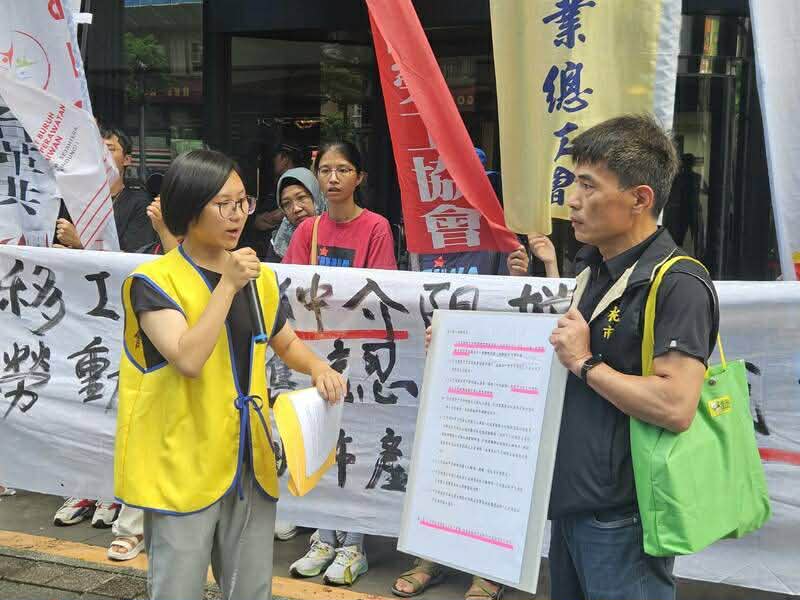
In the Achem case, both management and labor brokers clearly displayed hostility and vigilance toward migrant workers joining the union. With assistance from the regional federation, the Taoyuan Confederation of Trade Unions, the union filed a petition for unfair labor practice decision with the Ministry of Labor and held a press conference opposing the company’s actions. The union also demanded amendments to the《Labor Union Act》to bring labor brokers under regulatory oversight. In October 2025, the parties reached a settlement at the Ministry of Labor, with the employer committing not to obstruct migrant workers from joining the Achem Technology Corporation union.
Nevertheless, labor-management conflict has not ended. At the end of 2025, Achem notified the union that it must vacate its office located within the factory premises. Since the union office had been established inside the factory since the Achem Opto-Electronic Corporation era to facilitate direct contact with and assistance for members, this move effectively constituted an indirect obstruction of union organization. The union believes this decision is directly related to its recruitment of migrant workers: if the union office is relocated outside the factory, migrant workers would face significant difficulties in contacting the union. Thus, even though the company appears to comply formally with the unfair labor practice decision outcomes, it continues to undermine migrant workers’ union participation in practice.
As a result, the Taoyuan Confederation of Trade Unions and the Achem Technology Corporation Union have once again filed a petition for the unfair labor practice decision with the Ministry of Labor and are preparing for further labor disputes.
[1] Read more here: Taiwan’s Unfair Labor Practice Decision System
[2] Read more here: Structural Problems of Taiwan’s Labor Brokerage System